
Many households think cabinet safety is only necessary once a child starts opening doors with confidence, yet curiosity often shows up earlier and in subtler ways. Simple barriers can shape safer routines long before constant supervision feels necessary. Products like the Jetec 10 Pieces Cabinet Locks for Babies fit into this quieter layer of protection, supporting daily home safety without changing how a home feels or functions.
Why Child Cabinet Locks Matter in Daily Home Routines
Child cabinet locks work best when they blend into everyday habits rather than interrupt them. Kitchens, bathrooms, and storage areas are used repeatedly throughout the day, often during moments when attention is divided. A practical safety solution should reduce risk without creating friction for adults who open those cabinets frequently.
In many homes, lower cabinets store items that are useful for adults but unsafe for children or pets. Child cabinet locks provide a consistent boundary, helping caregivers feel steadier about what stays accessible and what does not.
They also support predictability. When cabinets remain reliably closed, children encounter fewer mixed signals about what is allowed. Over time, this consistency can reduce repeated testing and pulling on doors.
How the Jetec Child Cabinet Locks Are Designed to Function
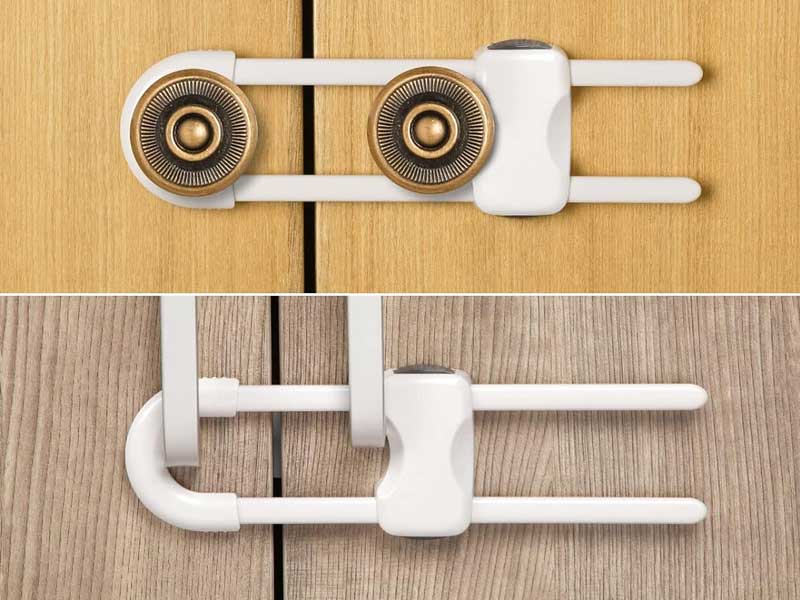
The Jetec child cabinet locks use a U-shaped sliding design that relies on cabinet knobs or handles rather than adhesives, magnets, or hardware. This approach focuses on simplicity and reversibility, which can be especially helpful for renters or homeowners who prefer not to modify cabinetry.
Sliding U-Shaped Structure
The lock slides over two adjacent knobs or handles, creating a physical barrier that limits opening. The straight edge faces outward while the curved edge aligns with the cabinet surface, helping the lock sit flush rather than protrude awkwardly.
This design choice keeps the lock visually minimal and reduces the chance of catching on clothing or bags while moving through the room.
Adjustable Fit for Common Cabinet Spacing
The sliding mechanism allows adjustment for knobs spaced up to 4.7 inches apart, measured center to center. This range covers many standard cabinet configurations found in kitchens, bathrooms, and storage rooms.
Because the lock is adjustable, it can be reused on different cabinets as needs change, offering flexibility rather than a fixed, one-time placement.
Installation Without Tools or Permanent Changes
One of the more practical aspects of these child cabinet locks is how they are installed. There is no drilling, no adhesive curing time, and no alignment templates to manage.
To use the lock, the orientation is set first so the straight edge faces outward. The lock is then threaded from the correct end until a clicking sound indicates engagement. A gentle pull test confirms that it stays secure under typical toddler force.
This tool-free setup makes it easier to adapt safety coverage over time. Locks can be added, removed, or repositioned as rooms are reorganized or as children grow and routines shift.
Material Choice and Everyday Durability
Jetec uses ABS material for these cabinet locks, a common choice for household safety products due to its balance of rigidity and resilience. In daily use, this material supports repeated opening and closing without feeling brittle.
The smooth edges are another practical detail. Toddlers often explore by touching and pressing objects around them. Rounded, smooth surfaces reduce the chance of small scrapes during this kind of exploration.
While no surface-mounted safety product is indestructible, the material selection aligns with typical household demands rather than short-term use.

Jetec 10 Pieces Cabinet Locks for Babies, U-Shaped Proofing Drawers Safety Child Locks Adjustable
Available on Amazon
Where These Child Cabinet Locks Are Most Useful
The wide application range is part of what makes these locks appealing for general home safety. They are designed to work with mushroom-shaped round knobs, D-shaped handles, and annular handles, covering many cabinet styles.
Common placement areas include:
- Kitchen cabinets containing cleaning supplies or utensils
- Bathroom cupboards with toiletries or medications
- Side-by-side refrigerator doors that open easily
- Pantry storage where small items are frequently accessed
- Bedroom or hallway closets with household tools
Because the locks are reusable, they can shift locations as certain rooms become more relevant to a child’s daily movement patterns.
Balancing Child Safety and Adult Convenience
A frequent concern with childproof cabinet locks is whether they make daily tasks harder for adults. The Jetec design focuses on adult-friendly operation, allowing cabinets to be opened and closed without excessive force or complicated steps.
This balance matters in busy households. When safety measures feel manageable, they are more likely to stay in place and be used consistently. A lock that frustrates adults often gets removed, which undermines its purpose.
The slim profile also helps the locks stay visually unobtrusive, preserving the look of the space rather than making safety the dominant visual feature.
Quantity and Coverage Across the Home
Each package includes ten child cabinet locks, which allows coverage across multiple rooms rather than focusing on a single area. This quantity supports a more holistic safety approach, where cabinets throughout the home follow similar rules.
Having multiple locks available also reduces the temptation to move a single lock back and forth, which can introduce gaps in coverage. Consistency across spaces often supports calmer, more predictable routines for both children and caregivers.
Understanding Limitations as Context
Like most sliding cabinet locks, these are designed for cabinets with paired knobs or handles. Cabinets with single knobs or handle-less designs may require different safety solutions.
Spacing is another consideration. Knobs must be within the specified distance for the lock to function properly. Measuring before use helps avoid frustration and ensures the lock performs as intended.
Seeing these limits as context rather than flaws helps set realistic expectations and leads to better product choices overall.
How Child Cabinet Locks Support Broader Home Safety
Child cabinet locks are one piece of a larger safety picture. They do not replace supervision, but they can reduce the frequency of risky moments, especially during routine tasks like cooking or cleaning.
By creating physical boundaries in commonly used spaces, products like the Jetec child cabinet locks help households feel more organized and intentional about safety. This quiet reinforcement can be especially valuable in homes with both children and pets, where curiosity is shared across ages and species.
A Practical Perspective on Everyday Use
Home safety often works best when it feels integrated rather than imposed. The Jetec child cabinet locks offer a straightforward way to manage access to cabinets without changing how rooms are used or maintained.
For households looking to add child cabinet locks that are adjustable, reusable, and simple to manage, this design supports steady routines and clearer boundaries. The focus stays on practical protection, allowing families to move through daily life with a little more confidence and a lot less second-guessing.
Jetec 10 Pieces Cabinet Locks for Babies, U-Shaped Proofing Drawers Safety Child Locks Adjustable
Available on Amazon

Leah writes about home safety from a practical, household-centered perspective. She pays close attention to how safety products are used in daily routines and how they contribute to a more secure living environment. Her work aims to help homeowners make thoughtful choices that improve safety without unnecessary complexity.