
Most homeowners assume fire safety is handled the moment an alarm is installed. After that, attention fades, routines take over, and the system is trusted to work quietly in the background for years. That assumption is not careless; it is realistic. Daily life leaves little room for ongoing maintenance reminders or repeated checks. The real challenge, then, is not remembering to stay vigilant, but choosing protection intentionally designed to remain reliable under that kind of long-term neglect, which is where the Kidde Hardwired Smoke Detector naturally enters the conversation.
How Modern Living Changed Expectations for a Smoke Detector
Homes today are more complex than they appear on paper. Open kitchens blend into living areas. Bedrooms are often isolated behind solid doors. Multiple floors stretch sound and visibility in ways older layouts never did. These changes subtly raise the bar for what a smoke detector is expected to handle, not just during an emergency, but across years of normal living.
In earlier decades, alarms were evaluated primarily by whether they sounded when smoke appeared. That narrow metric no longer holds. Today, reliability includes restraint. Devices that trigger too often during routine activities train occupants to ignore them. Over time, that erosion of trust becomes its own risk. A dependable system must therefore balance sensitivity with discrimination, reacting decisively only when conditions truly warrant it.
This shift has also reframed maintenance expectations. Homeowners increasingly favor solutions that reduce the number of actions required to remain protected. Instead of asking people to remember schedules and replacements, modern fire alarm design aims to absorb those responsibilities into the system itself. The result is protection that aligns better with real human behavior.
Hardwired Power as a Structural Decision
A hardwired smoke detector draws its primary power from a home’s electrical system, which fundamentally changes how reliability is achieved. Instead of relying on user-managed batteries for daily operation, the device remains continuously powered as long as the home has electricity. This removes one of the most common points of failure in residential alarms: interrupted power due to forgotten or improperly replaced batteries.
Connecting directly to 120V AC wiring anchors the detector into the home’s infrastructure. It becomes less of an accessory and more of a permanent fixture, similar to lighting or climate control. That permanence supports consistency. When protection is built into the structure, it is less vulnerable to lapses in attention.
The presence of a long-life battery backup reinforces this foundation rather than substituting for it. The battery is reserved for power interruptions, remaining dormant during normal operation. This preserves its capacity over time and ensures it is available when conditions change unexpectedly. The layered power approach reflects a design philosophy focused on redundancy without complexity.
From a long-term planning perspective, this configuration simplifies ownership. Instead of managing multiple replacement cycles across different rooms, homeowners can align the lifespan of the power source with the lifespan of the device itself. Over ten years, this reduces cumulative costs and minimizes opportunities for inconsistency.
Detection Calibrated for Real Homes, Not Ideal Conditions
Residential environments are full of variables that challenge detection accuracy. Cooking generates smoke and airborne particles. Bathrooms create humidity. Heating systems cycle on and off. Older alarms often interpret these conditions too aggressively, leading to nuisance alerts that disrupt daily life.
Enhanced sensing technology is designed to address this reality by refining how smoke is detected rather than simply increasing responsiveness. The objective is not to suppress alerts, but to reduce false triggers caused by routine activities. When alarms activate less often without cause, they carry more authority when they do sound.
When smoke is detected, the alert follows a standardized and recognizable pattern. Three long beeps paired with a flashing red LED provide clear confirmation that the signal is intentional and urgent. The 85-decibel alarm level is calibrated to carry through walls and closed doors while remaining appropriate for residential use.
Compliance with UL 217 9th Edition and FCC standards further supports confidence in performance. These standards reflect updated testing protocols that account for modern materials and fire behavior, making them more representative of contemporary living spaces. Meeting them indicates that the detector has been evaluated against conditions closer to real-world use.
Interconnection and the Shift from Devices to Systems
One of the most meaningful evolutions in residential fire safety is the move from isolated alarms to interconnected systems. Interconnection allows multiple alarms to communicate so that when one detects smoke, all alarms sound simultaneously.
This coordination addresses a fundamental limitation of sound-based alerts. In multi-level homes or layouts with closed bedrooms, an alarm sounding in one area may not be heard clearly elsewhere. Interconnection removes reliance on proximity, ensuring that alerts reach occupants regardless of where the event begins.
The benefit is especially relevant at night. Closed doors, distance, and sleep all reduce awareness. A synchronized alert across the home shortens response time and eliminates uncertainty about whether the signal has been noticed.
Different models support different interconnection options, and wiring requirements vary. Recognizing this variability allows homeowners to plan installations realistically, particularly in existing homes. Transparency around compatibility frames system design as intentional rather than assumed.
Key advantages of an interconnected fire alarm system include:
- Simultaneous alerts across all living areas
- Reduced dependence on layout or distance
- More consistent awareness during low-visibility situations
Together, these factors elevate the alarm network from individual devices into a coordinated safety layer.

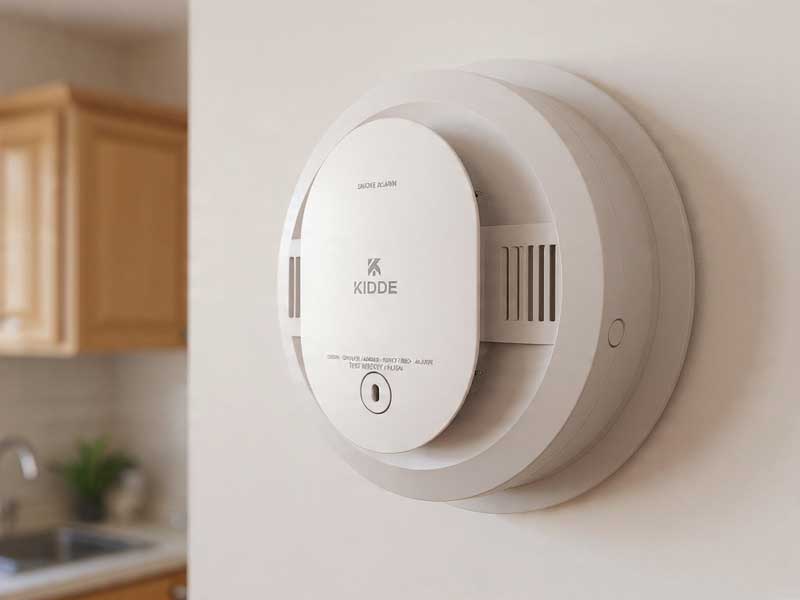
Kidde Hardwired Smoke Detector, 10-Year Battery Backup, Interconnectable, LED Warning Light Indicators, 4 Pack
Available on Amazon
Visual Indicators That Add Clarity Without Noise
Audible alarms are essential in emergencies, but visual cues provide valuable context that sound alone cannot offer. LED warning light indicators serve this role quietly and effectively.
When the alarm is active, the red LED flashes in sync with the alert pattern. This visual confirmation helps occupants quickly understand what is happening, even in noisy or chaotic situations. It also assists in identifying which unit initiated the alert once conditions stabilize.
These indicators reduce guesswork. Instead of searching blindly or second-guessing whether an alarm is still active, visual feedback guides attention deliberately. Over time, this reinforces trust in how the system communicates.
Self-Monitoring That Reduces Silent Failure
Modern alarms increasingly include internal self-monitoring to reduce the risk of unnoticed malfunction. This self-testing function checks key internal components to ensure the device remains operational even when it is not actively alerting.
While manual button testing remains recommended, automated checks reduce dependence on perfect user behavior. They help identify internal issues that might otherwise remain hidden until the device is needed most.
This approach reflects a broader shift in safety design. Responsibility is shared between the user and the system, reducing the likelihood that protection quietly degrades over time. The result is greater confidence that the alarm will behave as expected when conditions change suddenly.
Positioning Within the Broader Alarm Market
Many homeowners compare options such as a first alert smoke alarm or a first alert smoke detector when planning protection. These products often provide solid baseline performance and are widely recognized. The distinction with a kidde smoke alarm lies less in basic detection and more in long-term design philosophy.
Kidde emphasizes durability, reduced maintenance, and integration. A kidde smoke detector configured for hardwired power and long-life backup aligns with current building standards and expectations for low-intervention safety. Instead of asking users to remember frequent maintenance tasks, the system absorbs much of that responsibility through design.
Compared with standalone battery-powered units, this approach reduces variability across rooms and floors. It also supports consistency, which becomes increasingly important as homes grow larger and layouts more complex.
Where This System Makes the Most Sense
This configuration is best suited for homeowners seeking permanence and predictability rather than flexibility. It fits environments where coordinated alerts and minimal maintenance are priorities.
Common scenarios where this approach aligns well include:
- Homes with existing hardwired infrastructure
- Multi-story layouts requiring synchronized alerts
- Households prioritizing long-term reliability over portability
It may be less appropriate for temporary residences or locations without access to AC wiring. Framing suitability this way positions limitations as context, not drawbacks.
A Calm, Long-Term Approach to Fire Safety
Fire safety does not benefit from urgency-driven decisions. The most effective systems are often the ones that fade into daily life, quietly monitoring conditions and responding only when necessary. By combining structural power, layered redundancy, coordinated alerts, and clear communication, this approach reflects a measured philosophy of protection.
Rather than demanding ongoing attention, it is designed to remain attentive on behalf of the household. That distinction is subtle, but it is what separates a basic smoke alarm from a dependable fire alarm system built for modern living.
Kidde Hardwired Smoke Detector, 10-Year Battery Backup, Interconnectable, LED Warning Light Indicators, 4 Pack
Available on Amazon

Alejandro focuses on everyday home safety practices and the tools that support them. With years of experience observing how common household risks develop, he writes about practical ways to reduce hazards related to fire, electricity, and water damage. His approach emphasizes clarity, usefulness, and solutions that fit naturally into real homes.