
Many people think better organization always means adding more shelves or permanent fixtures, yet mobility often delivers more real value in active spaces. A well-designed rolling solution can reduce clutter, shorten routines, and keep tools accessible without locking them into one spot. That practical balance is where the Rubbermaid utility cart enters the conversation, offering a compact but capable way to move supplies, equipment, and materials through busy environments without complicating the layout.
Why a Rubbermaid Utility Cart Fits Modern Organization Needs
A storage solution earns its place when it adapts to changing tasks rather than forcing users to reorganize around it. The Rubbermaid utility cart is structured around flexibility, which matters in garages, stock rooms, and shared work areas where priorities shift throughout the day.
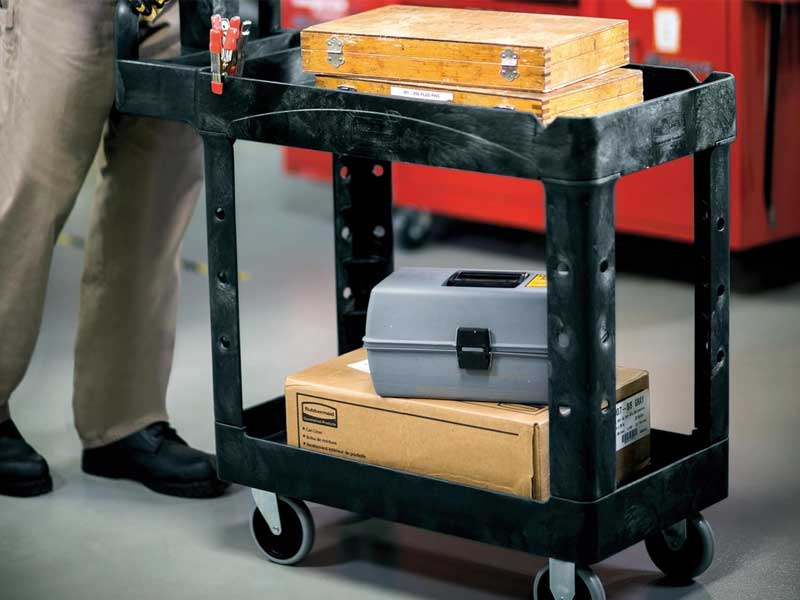
Its two-shelf layout keeps items visible and reachable, reducing the mental friction that comes with stacked bins or closed cabinets. Because the shelves are lipped, contents stay contained during movement, even when the cart is fully loaded. This design supports a cleaner workflow, especially in environments where tools and supplies circulate constantly.
The high-density structural foam construction also plays a role in long-term organization. A cart that resists denting, chipping, or peeling maintains its shape and usability over time, which helps prevent the gradual disorder that comes from worn or damaged storage tools.
Design Choices That Support Heavy-Duty Utility Carts
A cart designed for frequent use needs more than capacity on paper. The details determine whether it stays easy to use once weight, space constraints, and repeated movement come into play.
Structural Foam Construction and Durability
The structural foam body gives the cart a solid feel without adding unnecessary bulk. This material choice helps the cart handle heavy loads while remaining manageable to push and steer. Since the surface resists cosmetic damage, it maintains a clean appearance even in demanding environments like manufacturing floors or maintenance areas.
Durability also supports efficiency. When a cart holds its shape and rolls predictably, users spend less time compensating for flexing shelves or unstable frames. That consistency matters when transporting supplies repeatedly throughout the day.
Lipped Shelves and Load Stability
The lipped shelves add a subtle but meaningful layer of control. Items stay within the shelf boundaries, reducing the need for extra bins or restraints. This feature is particularly useful when carrying mixed loads, such as tools, cleaning supplies, or boxed materials, where shifting can disrupt balance.
By keeping items contained, the cart supports faster movement between tasks while maintaining a sense of order.
Maneuverability in Tight and Busy Spaces
Mobility is often where utility carts fall short, especially in narrow aisles or crowded work zones. The Rubbermaid utility cart addresses this through a combination of handle design and caster configuration.
Ergonomic Handle Placement
The ergonomically designed handle is positioned to encourage a natural pushing posture. Proper hand placement and push height improve control, which becomes noticeable when navigating corners, doorways, or uneven surfaces. Better control also reduces the need for frequent stops to reposition the cart, keeping workflows smooth.
Locking and Swivel Caster Balance
The caster setup combines two fixed locking casters with two swivel casters. This balance allows the cart to track straight when moving longer distances while still turning easily in confined areas. Locking the fixed casters during loading and unloading adds stability, preventing unwanted movement when weight is being added or removed.
This thoughtful approach to mobility helps the cart function reliably in warehouses, classrooms, and stock rooms where space is shared and constantly changing.

Rubbermaid Commercial Products 2-Shelf Utility/Service Cart, Small, Lipped Shelves, Ergonomic Handle, 500 lbs
Available on Amazon
Capacity That Serves More Than One Purpose
With a rated capacity of up to 500 lbs., the cart supports more than light-duty organization. That strength expands how it can be used across different settings without requiring multiple storage solutions.
In a garage, it can handle power tools, hardware bins, and bulky supplies without strain. In a cleaning or maintenance environment, it accommodates heavier equipment alongside consumables. The capacity also allows the cart to act as a temporary staging area, keeping projects organized as they move from one step to the next.
Despite this strength, the cart remains compact, which helps preserve floor space. This balance between load capacity and footprint is key for anyone managing limited room without sacrificing functionality.
Inmolded Storage That Reduces Accessory Clutter
Organization improves when tools have a clear, consistent place. The cart’s inmolded storage features address this by integrating holsters, hooks, and notches directly into the design.
These built-in elements reduce reliance on add-on accessories that can loosen or break over time. Easy-reach hooks keep frequently used tools accessible, while molded compartments help separate items without additional containers. The bottom shelf remains easy to access, supporting quick retrieval of larger or heavier objects.
This integrated approach keeps the cart streamlined while still offering flexibility in how items are arranged.
Where a Small Utility Cart Makes the Most Sense
The “small” designation reflects footprint rather than capability. This cart is particularly effective in environments where space efficiency matters as much as strength.
In warehouses or stock rooms, it functions as a mobile extension of shelving, reducing back-and-forth trips. In garages, it acts as a movable work companion that brings tools to the task rather than spreading them across surfaces. In cleaning or manufacturing settings, it keeps supplies organized while allowing quick relocation as priorities shift.
Its adaptability supports a minimalist mindset: fewer fixed storage pieces, more multifunctional tools.
Understanding Limitations as Context
No utility cart suits every scenario, and understanding boundaries helps set realistic expectations. The two-shelf design prioritizes accessibility over vertical separation, which may not suit situations requiring multiple categorized layers. The cart also focuses on durability and function rather than decorative appeal, aligning it more with workspaces than living areas.
These considerations don’t diminish its value; they clarify where it performs best and how it complements existing storage systems.
Long-Term Value and Warranty Perspective
A 10-year limited warranty signals confidence in materials and construction. From an organizational standpoint, this matters because long-lasting tools reduce replacement cycles and maintain consistency in storage systems. A cart that remains reliable over years supports stable routines and predictable layouts.
This longevity aligns with efficient, minimalist principles: investing once in a durable solution rather than cycling through short-term fixes.
How the Rubbermaid Utility Cart Supports Confident Organization
The strength of the Rubbermaid utility cart lies in how its features work together rather than in any single specification. Durable materials, controlled mobility, integrated storage, and meaningful load capacity combine to create a tool that simplifies movement and reduces clutter in active spaces.
For those managing busy environments, the cart provides structure without rigidity. It keeps supplies organized, accessible, and mobile, reinforcing a sense of control over space and workflow. As a heavy-duty rolling cart, it demonstrates how thoughtful design can make organization feel straightforward and sustainable rather than complicated.
Rubbermaid Commercial Products 2-Shelf Utility/Service Cart, Small, Lipped Shelves, Ergonomic Handle, 500 lbs
Available on Amazon

Tyler is a home-organization writer with a strong interest in minimalism and practical living. He studies trends in small-space design, storage solutions, and organizational systems to help readers create cleaner, more efficient homes. Tyler focuses on simplifying complex ideas and making organizational strategies easy for anyone to apply.