
It’s common to reach for a handheld drill and make do, even when the task calls for more control than your hands can comfortably provide. Holes drift, pressure varies, and what should feel routine turns into something you have to slow down and overthink. Over time, that friction adds up and makes certain projects feel heavier than they need to be.
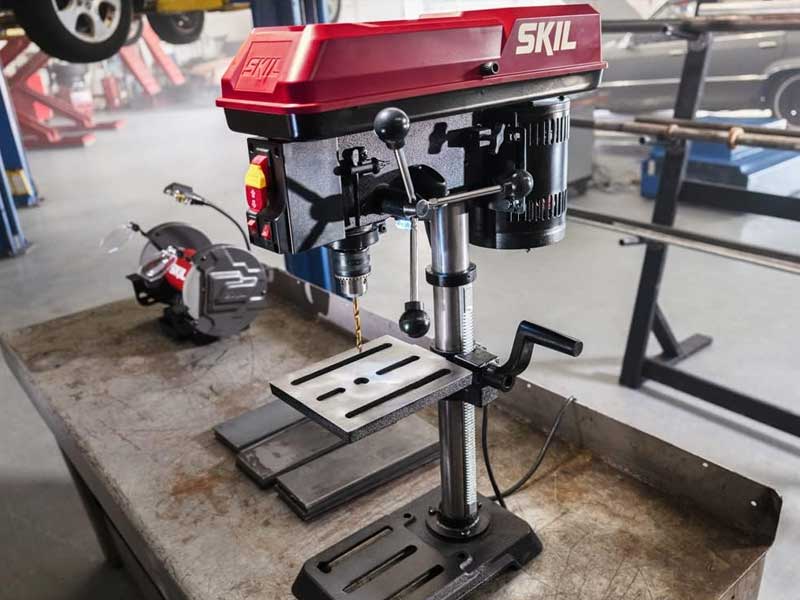
The SKIL 6.2 Amp 10 In. Benchtop Drill Press enters that moment quietly. It’s not about upgrading for the sake of power or precision on paper, but about creating a calmer, more predictable way to drill holes when accuracy starts to matter more than speed or improvisation.
Where a Drill Press Changes the Feel of Routine Projects
A benchtop drill press reshapes how drilling fits into a workflow by removing the need to stabilize the tool with your body. Instead of managing angle, pressure, and depth all at once, the machine holds those variables steady so attention can shift to material placement and outcome. That change alone tends to make repeated drilling tasks feel more approachable rather than fatiguing.
With a 10-inch capacity and a fixed vertical motion, this SKIL model supports common shop and home projects like shelving components, small furniture parts, jigs, and light metal brackets. The work feels more deliberate, not slower, because each hole follows the same path without constant correction.
Stability That Reduces Second-Guessing
Once a piece is positioned on the table, the drill press becomes a predictable partner. There’s no need to brace your wrist or fight tool torque, which helps reduce hesitation before committing to a hole. That sense of steadiness often translates into cleaner results and fewer pauses to reassess alignment mid-task.
Power and Speed Choices That Match Everyday Materials
The 6.2 amp induction motor is designed to deliver consistent power without the sudden surges people associate with handheld drills. In practical terms, that steadiness matters when moving between wood and metal, where uneven power can chatter the bit or burn the surface. The motor’s behavior supports smoother entry and follow-through, which helps materials respond more predictably.
Equally important is the five-speed system, ranging from 610 to 2,800 RPM. Rather than treating speed as a technical setting, it’s more useful to think of it as a way to match the drill press to the feel of the material. Slower speeds support denser stock and metal, while higher speeds keep softer woods from tearing. That range allows the same machine to stay relevant across different projects instead of feeling narrowly tuned.
Because the speeds are clearly defined, switching between them feels intentional rather than experimental. The result is less trial-and-error and more confidence that the machine is operating within a comfortable range for the task at hand.

SKIL 6.2 Amp 10 In. 5-Speed Benchtop Drill Press with Laser Alignment & Work Light – DP9505-00
Available on Amazon
Seeing the Hole Before You Commit
Laser alignment and workspace lighting
The built-in laser alignment system provides a clear visual reference for where the bit will meet the material. This reduces the small but persistent uncertainty that comes from estimating center points by eye. When holes need to line up across multiple pieces, that clarity helps keep everything consistent without repeated marking and checking.
An integrated LED work light supports visibility directly at the drilling point. In everyday shops where overhead lighting isn’t always ideal, that focused illumination makes it easier to see grain direction, metal markings, or surface imperfections before drilling begins.
Depth That Stays Consistent Without Extra Measuring
The adjustable depth stop allows holes to reach the same depth repeatedly, which is especially helpful when working on sets of parts. Instead of measuring each hole or relying on feel, depth becomes a controlled variable. This consistency supports cleaner assemblies and reduces the mental load of tracking measurements during repetitive tasks.
Adjustability That Fits the Way Benchtops Are Actually Used
The adjustable table height plays a quiet but meaningful role in daily use. It allows materials of different thicknesses to sit at a comfortable working level, reducing awkward positioning or makeshift supports. Over time, that flexibility helps the drill press integrate more naturally into a shared workspace rather than dictating how everything else must adapt.
Because adjustments are mechanical and straightforward, changes feel like part of the routine rather than an interruption. The table moves to accommodate the project instead of forcing the project to fit a fixed setup. This matters when switching between small precision pieces and bulkier items within the same session.
The overall footprint stays manageable for a benchtop environment, making it easier to dedicate space without reorganizing an entire shop. That balance between capability and size often determines whether a tool is used regularly or left idle.
Together, these adjustments support a workflow where preparation feels lighter. Less time is spent compensating for limitations, and more time is spent focusing on outcomes that feel controlled and repeatable.
Who This Fits Into Naturally
This drill press fits well into routines where accuracy is valued but industrial scale isn’t required. Woodworkers who want cleaner joinery, hobbyists working through repeated parts, and homeowners maintaining small metal or wood projects often find that it replaces uncertainty with steadiness.
It’s especially suited to people who want drilling to feel like a predictable step rather than a point of stress. By supporting clarity, consistency, and ease of setup, the SKIL 6.2 Amp Benchtop Drill Press helps everyday tasks feel more manageable and less mentally demanding, reinforcing confidence through reliable results rather than complexity.
SKIL 6.2 Amp 10 In. 5-Speed Benchtop Drill Press with Laser Alignment & Work Light – DP9505-00
Available on Amazon

Jenna is a mechanical engineering graduate who fell in love with weekend DIY projects during college. She enjoys analyzing how tools are built, how they perform, and whether they offer real value. Jenna writes in a friendly, accessible style that helps beginners feel confident tackling their first home upgrades.