
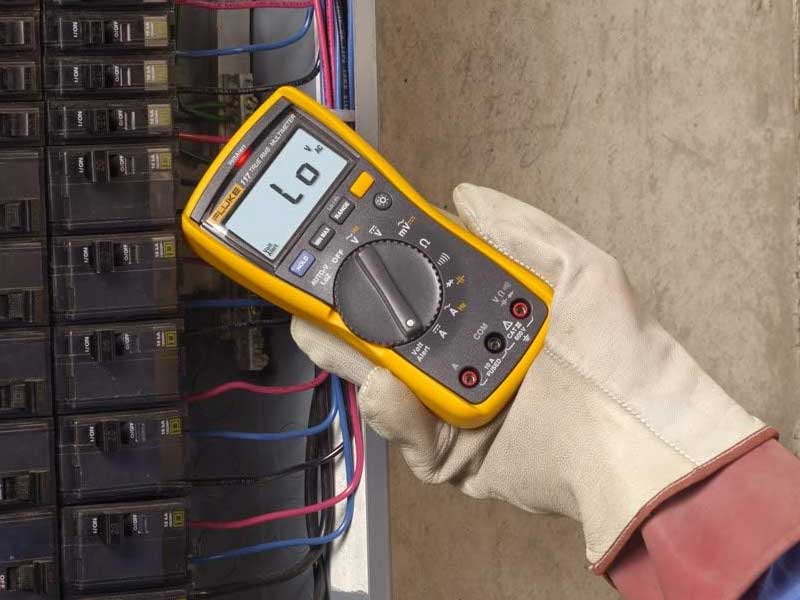
A common myth around electrical testing is that accurate measurements require complicated setups or years of experience. In reality, much of the confusion comes from tools that don’t clearly communicate what they’re seeing. The Fluke 117 digital multimeter is often discussed as a solution to that problem, especially for DIYers who want reliable readings without second-guessing their setup or skills.
Electrical testing can feel intimidating at first, but tools like this one are designed to reduce uncertainty rather than add to it. Understanding how the Fluke 117 is built—and why certain features exist—helps explain why it’s frequently chosen for home troubleshooting and learning-focused use.
How the Fluke 117 Digital Multimeter Simplifies Electrical Measurements
At its core, the Fluke 117 digital multimeter is built to remove extra decision-making from common measurements. Instead of forcing the user to choose between AC and DC voltage ranges, it relies on AutoVolt technology to identify the signal automatically. For a beginner, this design choice reduces setup errors without hiding what’s happening electrically.
Internally, this auto-selection works by sampling the incoming signal and applying the correct measurement mode. That means when you move from testing an outlet to checking a battery-powered circuit, the meter adapts without requiring manual switches. This kind of automation doesn’t make the tool less educational—it simply keeps attention on the reading itself.
Another important design element is its low input impedance mode, often labeled as LoZ. In modern homes, long wire runs and nearby energized cables can create “ghost voltage,” which shows up on sensitive meters even when a circuit isn’t truly energized. By intentionally lowering impedance in this mode, the meter filters out that misleading signal, helping users trust what they see.
Non-Contact Voltage Detection and Why It Matters
VoltAlert Technology Explained
Non-contact voltage detection is one of those features that sounds optional until you understand how it works. The Fluke 117 includes VoltAlert technology, which senses electric fields around energized conductors without requiring probe contact. This is not a measurement tool in the traditional sense—it’s a presence check.
For beginners, this feature acts as a first layer of awareness. Before touching a wire or opening a box, you can confirm whether voltage is present. It doesn’t replace probe-based testing, but it adds context and reduces guesswork.
Practical Benefits for Home Users
In real DIY scenarios, this kind of non-contact voltage detection is especially useful when tracing circuits or confirming that a breaker actually cut power. It helps users develop safer habits by encouraging verification rather than assumption.
Because the detection is integrated into the meter rather than a separate tool, it also reduces clutter. That integration is a design decision focused on practicality rather than expanding feature lists.
Limits Worth Understanding
It’s important to note that non-contact detection doesn’t provide voltage level or load information. It simply indicates presence. Understanding that limitation helps users apply the feature correctly and avoid overconfidence.
Measurement Capabilities Beyond Basic Voltage
The Fluke 117 doesn’t stop at voltage checks. It measures resistance, continuity, frequency, and capacitance—functions that often feel abstract until they’re explained in practical terms.
Resistance measurement helps identify broken wires or poor connections. Continuity mode, usually paired with an audible tone, confirms whether electricity can flow through a path. These features are foundational for electrical troubleshooting, especially when diagnosing switches, outlets, or simple appliances.
Capacitance and frequency measurement are less frequently used by beginners, but their inclusion reflects the meter’s broader learning potential. As DIYers grow more comfortable, these functions become relevant when dealing with motors, lighting systems, or HVAC controls. The meter doesn’t force complexity early on, but it doesn’t limit growth either.

Fluke 117 Digital Multimeter, Non-Contact AC Voltage Detection, Measures Resistance /Continuity /Frequency /Capacitance /Min Max Average
Available on Amazon
True RMS Accuracy and Signal Behavior
What True RMS Actually Means
Household electrical signals aren’t always smooth sine waves. Devices like dimmers, variable-speed motors, and modern electronics distort waveforms. A True RMS multimeter calculates the effective value of these irregular signals rather than assuming ideal conditions.
The Fluke 117 is a True RMS multimeter, meaning it measures real-world signals more accurately than averaging meters when waveforms are non-linear. This matters most when readings influence decisions, such as verifying load behavior or diagnosing flickering lights.
When Accuracy Affects Confidence
For DIY users, accuracy isn’t about lab-grade precision—it’s about consistency and trust. When a meter provides stable readings across different situations, users gain confidence in both the tool and their understanding.
Min, Max, and Average Recording
Another accuracy-related feature is the ability to record minimum, maximum, and average values. This is useful for catching fluctuations that aren’t visible in a single snapshot reading, such as voltage dips when appliances start.
Safety Rating, Build Choices, and Everyday Use
Safety design often goes unnoticed until it’s missing. The Fluke 117 carries a CAT III 600V safety rating, which aligns with typical residential and light commercial environments. This rating reflects insulation design, spacing, and internal protection—not just marketing labels.
The meter also supports current measurement up to 10 amps, with short-duration overload protection up to 20 amps. While not intended for heavy industrial loads, this range covers most household diagnostics.
Practical usability features include a large white LED backlight for dim areas and compatibility with a magnetic hanger for hands-free work. These details don’t affect measurement theory, but they influence how comfortable the tool feels during real projects.
Battery life is another subtle but important consideration. With up to 400 hours of typical use without the backlight, the meter emphasizes reliability over constant maintenance. This is especially valuable for tools that may sit unused between projects.
Value Perspective for Learning-Focused DIYers
From a value standpoint, the Fluke 117 sits in a space that prioritizes clarity and reliability rather than feature overload. Its design choices consistently aim to prevent common mistakes, such as misreading ghost voltage or selecting the wrong measurement mode.
For someone learning electrical basics or upgrading from a very simple tester, this balance matters. The meter explains electrical behavior through consistent readings rather than overwhelming menus or settings. That approach aligns well with confident DIY learners who want to understand what’s happening, not just get a number.
The Fluke 117 digital multimeter doesn’t promise to replace professional equipment, but it doesn’t pretend beginners should accept unreliable data either. Its value comes from thoughtful engineering choices that support learning while delivering dependable results.
Closing Thoughts on the Fluke 117 Digital Multimeter
Electrical tools are most empowering when they reduce uncertainty instead of adding pressure. The Fluke 117 digital multimeter supports that goal by combining automatic functions, practical safety features, and measurement accuracy that reflects real household conditions. For DIYers building confidence in electrical troubleshooting, it offers a calm, logical path toward understanding how circuits behave—without making the learning process feel fragile or overwhelming.
Fluke 117 Digital Multimeter, Non-Contact AC Voltage Detection, Measures Resistance /Continuity /Frequency /Capacitance /Min Max Average
Available on Amazon

Jenna is a mechanical engineering graduate who fell in love with weekend DIY projects during college. She enjoys analyzing how tools are built, how they perform, and whether they offer real value. Jenna writes in a friendly, accessible style that helps beginners feel confident tackling their first home upgrades.