
Smart homes often fail quietly. Lights miss cues. Sensors lag. Apps multiply. What starts as convenience turns into friction when devices stop speaking the same language, and routines feel stitched together instead of intentional. That disconnect is exactly where a dedicated hub earns its place, and it frames the real value of the Samsung SmartThings Hub 3rd Generation.
Why a Central Hub Still Matters
Many smart devices promise independence. In practice, independence creates silos. A camera runs in one app, a lock in another, and lighting schedules live somewhere else entirely. Without a central coordinator, automations depend on cloud timing and brand-specific rules that can feel fragile. A hub reintroduces order by acting as a single decision-maker inside the home, rather than relying on scattered instructions from multiple services.
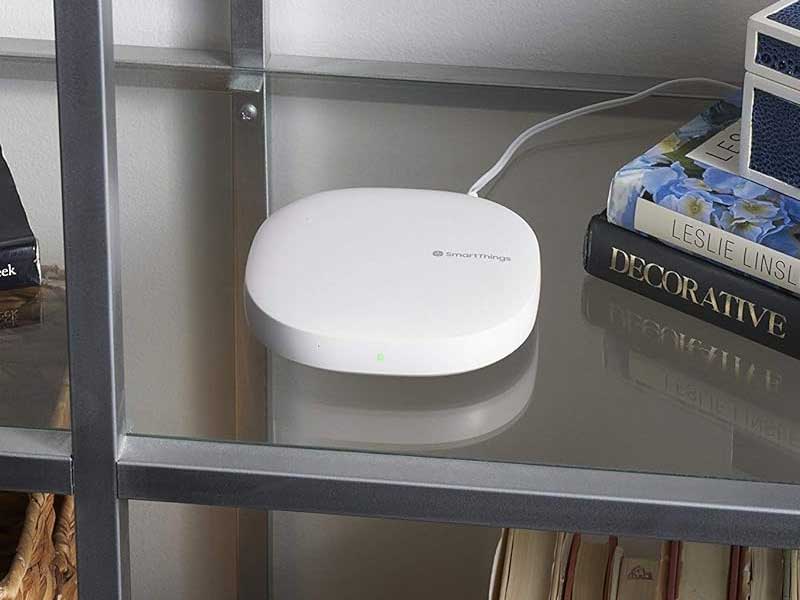
The Samsung SmartThings Hub 3rd Generation approaches this role with restraint. It does not try to replace your devices or overwhelm you with technical control panels. Instead, it focuses on orchestration. Doors, motion sensors, lights, and outlets respond to shared conditions rather than isolated commands. That shift turns smart features into predictable behavior, which is the point most homes quietly hope for.
How SmartThings Fits Real Homes
Homes are rarely built around technology. People add devices over time, often mixing brands based on price, availability, or specific needs. A practical hub must accept that reality. SmartThings is designed to sit in the middle of those choices, not force a reset. The system supports local protocols like Zigbee and Z-Wave alongside cloud-based connections, allowing older sensors and newer smart products to coexist without constant reconfiguration.
Control flows through a single smartphone app that emphasizes clarity over novelty. Rooms, devices, and routines are grouped logically, reducing the need to remember which brand controls what. This matters because smart homes fail most often at the interface level. If control feels confusing, features go unused. SmartThings keeps attention on outcomes rather than settings.
Voice assistant compatibility adds another layer of flexibility. Integration with Alexa and Google Home allows commands to stay natural while automation handles the heavy lifting in the background. The hub does not compete with voice platforms; it supports them by giving commands a stable system to act on.
![SmartThings Hub 3rd Generation [GP-U999SJVLGDA] Smart Home Automation Hub Home Monitoring Smart Devices - Alexa Google Home Compatible](https://m.media-amazon.com/images/I/715Vd5M9CDL._AC_SL1500_.jpg)
SmartThings Hub 3rd Generation [GP-U999SJVLGDA] Smart Home Automation Hub Home Monitoring Smart Devices – Alexa Google Home Compatible
Available on Amazon
Compatibility Without the Guesswork
One of the hub’s strongest qualities is predictability. It works with a wide range of smart devices without requiring brand loyalty, which lowers the risk of future purchases. That openness makes planning easier because expansion does not depend on staying within a single ecosystem.
Automation That Feels Natural
Automation succeeds when it mirrors daily life instead of forcing new habits. SmartThings allows routines to respond to presence, time, and simple triggers without feeling rigid. Lights can react to entry without manual input. Climate controls can adjust based on whether someone is home, not just the clock.
This approach encourages gradual adoption. Users can start with one or two automations and expand as confidence grows. Because the hub handles coordination, new devices fit into existing routines rather than restarting the learning curve each time.
Home monitoring also benefits from this structure. Sensors do more than report activity. They participate in context. A door opening can trigger lighting, send a notification, or adjust a routine based on time of day. These responses feel less like alerts and more like awareness, which aligns better with everyday expectations.
Importantly, the system avoids unnecessary complexity. Advanced customization exists, but it does not dominate the experience. The design assumes that most households want reliability first, experimentation second. That assumption keeps automation from becoming another chore.
Who This Hub Makes Sense For
The Samsung SmartThings Hub 3rd Generation is well suited for households that value flexibility over novelty. It fits homes that already own a mix of smart products and want them to behave like one system. It also makes sense for those planning to expand gradually, without locking future choices into a single brand.
Rather than chasing the newest feature, this hub focuses on stability, compatibility, and sensible automation. It does not promise a futuristic showcase. It offers something more durable: a home that responds consistently, adapts quietly, and stays manageable as technology changes.
SmartThings Hub 3rd Generation [GP-U999SJVLGDA] Smart Home Automation Hub Home Monitoring Smart Devices – Alexa Google Home Compatible
Available on Amazon

Vince is a smart-home systems installer with extensive experience setting up security devices, automation hubs, and connected home ecosystems. He understands integration challenges, performance issues, and what truly improves daily living. Vince writes practical guides that help readers build reliable and user-friendly smart-home setups.